
Feeding your baby — however you do it — is one of the most personal, emotional decisions you’ll ever make. You deserve clear, calm information that empowers you, not adds pressure.
I’ve read the full report, reviewed what the FDA said in response, and spent time understanding how this might land for parents. If you’re using formula—by—choice, by need, or by circumstance, you deserve reassurance and real talk, not shame.
Let’s walk through what was found, what it means, and how to move forward — gently.
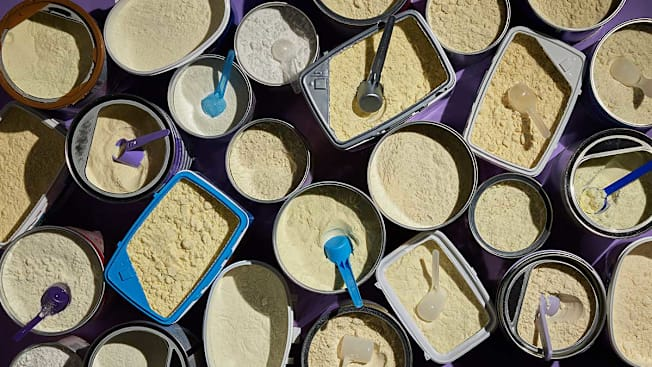
What Did Consumer Reports Test — and Why Does It Matter?
Consumer Reports tested 41 powdered infant formulas for a range of harmful substances:
- Heavy metals (like arsenic, lead, cadmium, mercury)
- PFAS, also known as “forever chemicals”
- BPA, which can leach from packaging
- Acrylamide, formed during high-temperature processing
Even in small amounts, these chemicals can build up — and that’s important, especially during infancy, when babies often rely on formula as their only source of nutrition. This isn’t about one bottle — it’s about cumulative exposure.
The day after the report came out, the FDA announced plans to tighten formula safety oversight. That’s a good sign. But it also shows us there’s work to be done.
What the Report Found — and How to Understand It
Arsenic
CR found the highest levels of arsenic in EleCare and Similac Alimentum, which are often used for babies with allergies or feeding challenges.
This is understandably upsetting if your baby is on one of these. But please don’t panic or switch without support. If your baby is growing well and doing okay, their safety includes their stability. Any change should come with your pediatrician’s guidance.
Lead
Almost every formula tested had some lead, which tells us this isn’t about one brand. It’s about an industry-wide need for better safety standards.
Some products tested well below California’s stricter limits. Others came close or exceeded them. That comparison matters — not because we want to chase perfection, but because it proves safer is possible.
There’s no safe level of lead. But some brands show us it can be minimized.
PFAS (Forever Chemicals)
PFAS are found in water, soil, and packaging, and can be difficult to detect. They were present in several formulas, but testing was limited.
What you need to know: this isn’t something you can manage on your own. PFAS exposure needs to be handled at the policy level. We need more transparency and more testing, because parents shouldn’t have to guess.
BPA and Acrylamide
Enfamil Nutramigen tested positive for both BPA and acrylamide. The company has publicly disagreed with the findings, but for families using this formula, it’s okay to feel concerned — or to bring it up with your pediatrician.
If your baby is medically dependent on a specific formula, support and consistency matter more than switching fast. Ask your care provider what they recommend based on your child’s health, not just the chart.
What Else Shapes Formula Choice (Besides Safety)?
Safety matters — of course it does. But research shows that parents are also influenced by taste, smell, and how their baby reacts to a formula.
One recent study found that:
- Parents often prioritize sensory comfort — how the formula tastes, smells, and feels to their child (Tian et al., 2022; Xi et al., 2023).
- Babies may reject a formula due to bitterness, sourness, or fishy flavor, and parents take that seriously (Xi et al., 2023).
- The person using the formula (the baby) and the person buying it (you) are not the same, and your baby’s cues matter.
So if you’ve ever thought, “I wanted to try that other formula, but my baby hated it,” — that’s valid. Sensory experience is part of safety and comfort, too.
Consumer Reports’ Top and Bottom Picks — What Stood Out
CR grouped formulas into three broad tiers based on how much contamination was detected.
Best Performing Brands (Lowest Toxin Levels)
- Bobbie
- Kendamil
- Earth’s Best
- Kirkland Signature (Costco)
- Similac Advance
These formulas had little to no detectable toxins. Many are affordable and easy to find.
Middle Ground (Acceptable Levels)
- ByHeart
- Parent’s Choice (Walmart)
- Up&Up (Target)
- Similac 360
- Happy Baby Sensitive
These formulas tested within safe ranges under current guidelines, though some showed low levels of metals or chemicals.
Concerning Results (Higher Levels Found)
- Similac Alimentum
- EleCare
- Enfamil Nutramigen
- Kabrita Goat Milk Formula
This group showed higher levels of heavy metals or packaging chemicals. What surprised many families is that these are often considered “premium” or medically necessary formulas.
Takeaway: higher price doesn’t mean lower exposure. And store-brand options often performed very well.

Why Regulation Still Has Gaps
You might be wondering: if this is known, why is it allowed?
Right now, there are no federal limits on how much lead, arsenic, or PFAS can be in baby formula. Some rules exist for baby food, but formula is largely left out.
The FDA’s Closer to Zero program aims to reduce exposure, but formula isn’t even covered yet. That’s why reports like this matter. They push for accountability, and they show us what’s already possible.
If some companies can make formula with lower toxin levels, all of them should.
What You Can Do as a Parent
Let’s start here: you are not to blame. You made the best choice you could with the information you had.
If you want to take next steps, here’s what’s most helpful:
- Talk to your pediatrician before switching, especially if your child uses a medical or hypoallergenic formula.
- You can try weaning your baby off formula if they are 12 months and above.
- Use filtered water when mixing, especially in homes with older pipes or well water.
- Skip homemade recipes — they may seem natural, but they often lack critical nutrients and can be unsafe.
- Watch your baby, not just the label. If they’re growing, digesting well, and their doctor is happy with their health — that’s meaningful data, too.
And one more thing: research shows that many parents believe imported formulas are automatically safer. That’s not always true. Sometimes the ingredients come from one place, but the product is made somewhere else (Shan et al., 2021). Clear labeling matters more than the country name on the box.
Quick View Summary
| Category | Notable Formulas | What to Know |
|---|---|---|
| Top Choices | Bobbie, Kendamil, Earth’s Best, Kirkland, Similac Advance | Lowest toxin levels in CR testing |
| Good Choices | ByHeart, Similac 360, Parent’s Choice, Up&Up, Happy Baby Sensitive | Acceptable, but some detectable levels |
| Worse Choices | Similac Alimentum, EleCare, Nutramigen, Kabrita | Higher levels of heavy metals or chemical contamination |
FAQs About Formula Safety
Is it okay to keep using a formula from the “worse” list?
If your baby is doing well and especially if they have medical needs, don’t rush to switch. Talk to your doctor and make a plan together.
Can I trust store-brand formulas?
Yes — many tested extremely well. Safety isn’t about price. It’s about quality control.
Do I need to switch immediately?
Not unless there’s a health reason. If you’re thinking about switching, gently switch your baby’s formula. Do it slowly and with support.
Final Thoughts
You don’t need to panic. You don’t need to overhaul everything. You don’t need to feel guilty for what you’ve been using.
This report gives us something better: clarity.
It shows us that safer formulas exist. That babies deserve better protection. That parents have a right to know what’s in the tin — and that some brands are already stepping up.
You’re not in this alone. You’re making thoughtful, loving choices every day — and that matters.
References
Tian, Y., Peng, H., Dong, X., Li, L., & Zhu, W. (2022). Consumers’ Brand Preferences for Infant Formula: A Grounded Theory Approach. Sustainability. https://doi.org/10.3390/su14137600
Xi, Y., Zhao, T., Liu, R., Song, F., Deng, J., & Ai, N. (2023). Assessing Sensory Attributes and Properties of Infant Formula Milk Powder Driving Consumers’ Preference. Foods, 12. https://doi.org/10.3390/foods12050997
Shan, L., Li, C., Yu, Z., Regan, Á., Lu, T., & Wall, P. (2021). Consumer perceptions on the origin of infant formula: a survey with urban Chinese mothers. Journal of Dairy Research, 88, 226–237. https://doi.org/10.1017/S0022029921000364