
Let’s Begin
If you’re thinking about introducing potty learning around 18 months, you may be wondering: Is this too early? When exactly should we start potty training? Are we rushing it? Will it even work? The truth is, this age can be a beautiful window for starting — not because your child is guaranteed to stop using diapers, but because they’re beginning to explore autonomy, body awareness, and imitation.
The focus isn’t on finishing quickly. It’s on gently building trust between your child and their body, one step at a time.
Getting Started
Introducing the Potty
Start by keeping a small potty visible in your child’s environment. Let them explore it fully dressed, sit on it during diaper changes, and watch others use the bathroom. Use clear, honest language: “This is where pee and poop go,” or “Sometimes our body tells us it’s time.”
There’s no need to make a big announcement. Just let it become part of the day.
Using Cloth or Padded Underwear
Padded cloth underwear can offer more feedback than diapers, helping your child notice when they’re wet. But they don’t “train” — they support awareness. If they lead to more accidents or stress, it’s okay to return to diapers or use them only during diaper-free time at home.
Creating a Daily Rhythm
Consistency builds confidence. Link potty seats to existing transitions:
- After waking up
- Before meals
- After naps
- Before going outside
- As part of the bedtime routine
Skip the questions like, “Do you need to go?” Instead, say: “It’s time to sit on the potty.”
Is It Possible to Start Around 18 Months?
Yes — if you treat it as a learning process, not a checklist. At this age, children are beginning to recognize patterns, follow routines, show signs of potty learning readiness, and interest in what others are doing. Some will begin using the potty regularly. Others may explore and practice without much “output” yet. Both are signs of progress.
It’s not about getting out of diapers by a deadline. It’s about helping your child feel connected to their body, their needs, and the tools that support them.
What Capability Looks Like at This Age
Some children at this stage show signs that they’re beginning to connect the dots. These might include:
- Walking steadily and sitting down without help
- Pausing or hiding when peeing or pooping
- Imitating bathroom behaviors
- Trying to pull pants down
- Understanding simple routines like “wash hands” or “time to sit”
No checklist is required. If a few of these are present and your child feels safe in the process, it’s okay to start gently.
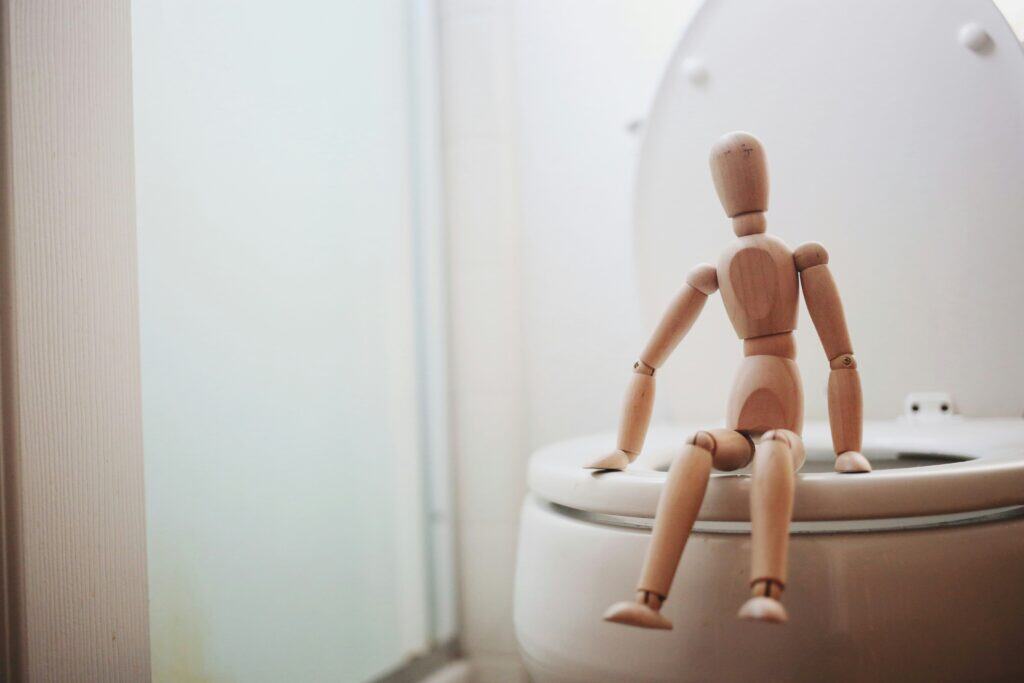
How to Support Potty Learning at 18 Months
Learn Through Play and Imitation
This age learns by watching and doing. Sit your child on the potty while you’re on the toilet. Let a teddy bear “go potty.” Read potty books. Let the potty be familiar and low-pressure.
Create a Safe and Accessible Environment
Use a potty seat that allows feet to rest flat. Keep it in the room where your child plays. Let them sit fully clothed at first. You don’t need rewards, timers, or apps. What works best is predictability and calm presence.
Handle Underwear Gently
Some children are excited by underwear. Others are confused by it, especially if it feels like a diaper. If you try it, do it playfully — not as a marker of progress. It’s okay to switch between diapers and underwear depending on what supports your child’s confidence.
A Learning Process, Not a Training Program
Toilet learning means supporting a skill over time. There’s no program to follow. No fixed window. Just rhythm, observation, and small steps forward.
Gender-Sensitive Tips
For Boys
Start seated. This avoids confusion and helps with both pee and poop. Once bowel movements are consistent in the potty, you can begin introducing standing if your child expresses interest.
For Girls
Make sure clothing is easy to manage. Model hygiene routines slowly — including wiping front to back. Let them practice handwashing and flushing without pressure.
Across genders, what matters most is repetition, access, and emotional safety.
Supporting Nighttime While Potty Learning
Nighttime dryness is not something you can teach — it’s something your child’s body will do when it’s ready. This is typically years after daytime dryness appears.
There’s no need to monitor readiness signs or wake them for nighttime potty trips.
What helps:
- A calm bedtime potty sit
- Waterproof mattress protection
- Pull-ups or diapers at night with no shame
- Gentle mornings: “Let’s try the potty,” not “Did you wet the bed?”
Common Approaches to Potty Learning
Gradual Transitioning
Start with play, introduce potty sits, increase observation, and move toward short diaper-free periods. This is the most respectful and flexible approach for toddlers around 18 months.
Fast-Track or 3-Day Methods
These often place children into a rigid schedule and remove diapers cold turkey. While they may “work” for some, they can also lead to fear, withholding, or emotional shutdown — especially at this age. A fast method isn’t more successful. It’s just faster.
Managing Common Challenges
Accidents
Accidents are part of the process. Respond simply: “Pee goes in the potty. We’ll try again next time.” Stay calm. Keep extra clothes nearby. Don’t treat accidents as mistakes — they’re information.
Poop Resistance
Pooping often takes longer. It can feel unfamiliar or scary. Let your child poop in a diaper while sitting on the potty if needed. Offer privacy, books, and time. Never rush a poop.
Regressions
Potty progress may stall during teething, illness, or big transitions. If your child resists completely, pause for a few weeks. You’re not going backward — you’re resetting for success.

Gentle Foundations That Support Progress
- Patience over urgency
- Consistency over structure
- Connection over control
Celebrate the quiet wins: sitting for a few moments, telling you they peed, staying dry for part of the day. Use descriptive praise: “You noticed the feeling in your body,” instead of “Good job!”
If your child is diaper-free more often, protect their skin with a light barrier cream — especially during early potty phases when wiping is inconsistent.
Signs That Potty Learning Is Underway
At this stage, progress might look like:
- Curiosity about the potty
- Asking to sit (even if nothing happens)
- Noticing they’re wet or dirty
- Staying dry during a short outing or nap
- Pooping at a predictable time of day
These small shifts build the foundation for long-term success. There’s no race. Just rhythm.
Final Thoughts
Beginning potty learning at 18 months doesn’t mean finishing by 18 months. It means opening a door — one your child will walk through at their own pace.
Start small. Stay grounded. Let your child know their body is good, their needs are welcome, and you’re with them every step of the way.
They don’t need to be fully ready.
They just need to be capable — and feel safe.
You’ll figure the rest out together.
FAQs
Can an 18-month-old really learn to use the potty?
Yes — many can begin exploring and learning. The process may take time, but capability often starts early.
How do I know if we should pause?
If your child resists every sit, shows distress, or stops noticing accidents, pause for 2–4 weeks and return to gentle modeling.
What if my child prefers pooping in a diaper?
That’s common. You can let them poop in a diaper while sitting on the potty. It bridges the gap without pressure.
Should we switch to underwear right away?
Only if your child is curious and it’s working. If underwear causes stress or confusion, it’s okay to wait.
Is it okay to start now and pause later?
Absolutely. That’s often the most respectful way forward. Start, observe, pause, reset — that’s how real learning happens.
Citations
- American Academy of Pediatrics, “The Right Age to Toilet Train,” HealthyChildren.org, May 24, 2022, https://www.healthychildren.org/English/ages-stages/toddler/toilet-training/Pages/The-Right-Age-to-Toilet-Train.aspx.
- American Academy of Pediatrics, “How to Tell When Your Child Is Ready,” HealthyChildren.org, November 2, 2009, https://www.healthychildren.org/English/ages-stages/toddler/toilet-training/Pages/How-to-Tell-When-Your-Child-is-Ready.aspx.
- CDC. “Important Milestones: Your Baby by Eighteen Months.” Centers for Disease Control and Prevention, October 22, 2018. https://www.cdc.gov/ncbddd/actearly/milestones/milestones-18mo.html.
- Child Development and Family Center. “All about Potty Training.” Northern Illinois University. Accessed October 14, 2024. https://www.chhs.niu.edu/child-center/resources/articles/potty-training.shtml.
- Medline Plus, “Toilet Training Tips,” MedlinePlus Medical Encyclopedia, accessed October 14, 2024, https://medlineplus.gov/ency/patientinstructions/000944.htm.
- Brazelton, T. (1962). A child-oriented approach to toilet training.. Pediatrics, 29, 121-8 . https://doi.org/10.1542/peds.29.1.121.
- Mayo Clinic Staff. “Potty Training: How to Get the Job Done.” Mayo Clinic, 2019. https://www.mayoclinic.org/healthy-lifestyle/infant-and-toddler-health/in-depth/potty-training/art-20045230.
- Largo, R., & Stutzle, W. (1977). Longitudinal Study of Bowel and Bladder Control by Day and at Night in the First Six Years of Life. II: The Role of Potty Training and the Child’s Initiative. Developmental Medicine & Child Neurology, 19. https://doi.org/10.1111/j.1469-8749.1977.tb07994.x.
- Nathan J. Blum, Bruce Taubman, Nicole Nemeth; Relationship Between Age at Initiation of Toilet Training and Duration of Training: A Prospective Study. Pediatrics April 2003; 111 (4): 810–814. 10.1542/peds.111.4.810
- Editorial Team. “The Best Potty Training Tips.” Cleveland Clinic, April 24, 2024. https://health.clevelandclinic.org/the-best-potty-training-tips.
- Choby, Beth A, and Shefaa George. “Toilet training.” American family physician vol. 78,9 (2008): 1059-64. https://www.aafp.org/pubs/afp/issues/2008/1101/p1059.html