
Welcome
If your child is around two and you’re wondering whether it’s time to begin potty learning, you’re not alone. This is a common age when questions start to come up: Are we late? Are we early? Should we start now or wait? But here’s something you won’t find in most guides: the real question isn’t when, it’s how.
At this age, your child is likely experiencing huge cognitive and emotional leaps. Potty learning can be a beautiful part of that — if we follow their pace, not ours.
Potty learning isn’t about crossing a finish line. It’s about guiding your child gently toward independence — with curiosity, not pressure.
Readiness Signs for Potty Learning at Age 2
Potty readiness isn’t just about what your child wants — it’s about what they’re capable of doing.
Signs to look for:
- Awareness of when they’re peeing or pooping (pausing, hiding, or saying it out loud)
- Mimicking bathroom habits like flushing or wiping
- Showing discomfort with dirty diapers
- Pulling pants up and down with some help
- Walking steadily and following simple instructions
Not every child will be thrilled about potty learning — and that’s okay. Enthusiasm isn’t required. Capability is.
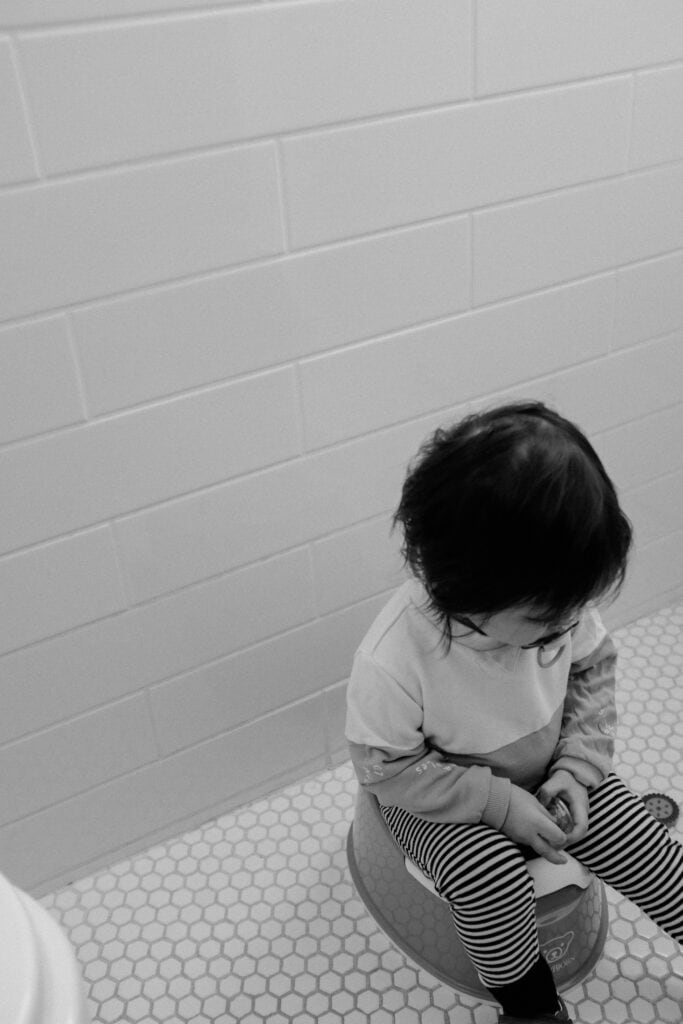
Creating a Gentle Routine
The most powerful way to begin is through rhythm — not rules. Create a gentle flow through the day that makes potty time feel predictable and non-negotiable, but never forced.
Try:
- Sitting on the potty first thing in the morning, before naps, and after meals
- Inviting them to sit while you model (“Mommy’s going potty — want to sit on yours too?”)
- Offering lots of neutral, descriptive language: “Your body is learning to do something new.”
And no, you don’t need sticker charts.
Avoid external rewards entirely because they disconnect children from the internal signals they’re learning to listen to.
“You listened to your body and made it to the potty — that’s amazing,” goes much farther than “You get a sticker!”
Should You Use Timers?
Timers are a staple in many potty training programs, but they can backfire. They often cause parents to focus on the clock instead of the child, and children to feel controlled instead of trusted.
Instead, link potty time to your natural day:
- Before leaving the house
- After eating
- Before sleep
- After waking
“Timers are great for cookies. But your child’s body deserves better than a buzz.”
A Sample Daily Potty Rhythm
Rather than thinking in minutes, think in moments:
- Wake-up: Sit on the potty first thing
- Before leaving the house: Potty check
- After meals/snacks: Invite a sit
- Mid-play: Gently remind when they pause or fidget
- Before naps and bedtime: One last try
Stay flexible. Life happens. But a steady rhythm makes children feel safe — and their body starts to catch on.
Daytime vs. Nighttime Learning
Here’s something Alexis is crystal clear about: You cannot teach nighttime dryness.
Daytime potty use is a coached skill. Nighttime dryness is biology.
It happens when a child’s bladder matures and their body starts producing enough antidiuretic hormone to slow urine production while sleeping — and that doesn’t usually happen until ages 5 or 6.
In the meantime:
- Use pull-ups or diapers at night without guilt
- Encourage a potty sit before bedtime and after waking
- Protect the mattress, not your pride
“If your child wets the bed, they’re not behind — they’re human.”
Why Fast-Track Methods Don’t Align with Gentle Coaching
The 3-Day Method may work for some, but it often triggers stress, sets up false expectations, and ignores emotional readiness.
Children are not robots. They’re not on a deadline.
A gradual, responsive approach — rooted in connection, modeling, and respect — leads to confidence. Not just dryness.
“Potty learning should never feel like boot camp. It should feel like a shared adventure.”
When Things Go Backward (And They Will)
Regressions are normal. Not just common — expected.
They happen after:
- Illness
- Travel
- Starting school
- Welcoming a new sibling
- Even a growth spurt
What to do?
- Stay calm
- Reconnect to your rhythm
- Never go backward emotionally, even if you need to reintroduce diapers temporarily
“When your child regresses, they aren’t being defiant — they’re asking: Is this still safe? Am I still okay?”
What If They’re Not Ready?
If your child…
- Resists all potty invitations
- Hides to poop
- Has no awareness when wet or soiled
- Cannot follow basic instructions
…they may not be ready right now. That’s not a failure. That’s information.
Take a step back, return to modeling, and try again in a few weeks. You haven’t missed the window. There is no deadline.
How Long Does It Take?
This question comes up constantly — but we never give fixed timelines.
The potty training duration could be three days, three months, or more. And all of those are completely okay.
Instead of watching the calendar, watch your child:
- Are they connecting with their body?
- Are accidents becoming less frequent?
- Are they starting to communicate clearly?
If so — you’re on the right track.
“It’s not about how fast. It’s about how supported.”
What About Boys?
Boys, girls, and all genders are equally capable — but some children benefit from certain strategies:
- Start all children sitting down until they’ve pooped successfully 10 times
- Peeing while seated reduces confusion and sets the stage for full toilet use
- Transition to standing when your child is emotionally ready and physically steady
You don’t need floating targets or cheerios — you need calm modeling and time.
Supporting Internal Motivation
The best motivation tool?
- Your belief in your child.
- Neutral, calm feedback.
- Letting them lead where they’re capable.
Kids are naturally proud when they master something real. Reinforce that:
“Wow, your body knew it had to go — and you listened. That’s amazing.”
No sticker can compete with that.
Potty Learning On the Go
Don’t stay home forever. Get out — just prepare.
Bring:
- A travel potty or foldable seat
- A wet bag
- A full change of clothes
- Easy-access snacks (because: toddlers)
Avoid asking, “Do you have to go?” Instead: “We’re going to try before we leave.”
Nighttime Accidents Are Normal
Even after your child is dry most nights, they may still wet the bed occasionally — for years. That’s not a regression. That’s childhood.
- Use waterproof covers
- Keep an extra fitted sheet under the top one for middle-of-the-night swaps
- Respond neutrally: “Looks like your body wasn’t ready to hold it. It will be someday.”
What You Actually Need
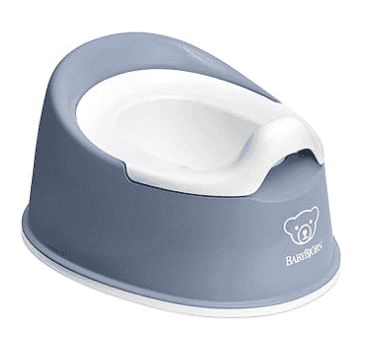
- A floor potty (or insert + sturdy stool)
- Easy-on/easy-off pants
- Hand soap your child enjoys using
- Books about pee, poop, and the body
- Time. Patience. And backup underwear.
No app, gadget, or potty with songs can replace a calm parent with a good plan.
When to Talk to a Doctor
Reach out to your pediatrician if:
- Your child seems in pain when peeing or pooping
- You notice blood in their stool or urine
- They regularly strain to poop
- You suspect chronic constipation
Behavioral resistance is common. Medical discomfort should always be ruled out first.
Final Thoughts
Potty learning is a slow reveal. It’s physical. It’s emotional. And it’s not always tidy.
Celebrate the quiet wins. Expect a few messy days. And remember: it’s okay if your child’s journey looks nothing like anyone else’s.
“Your job isn’t to rush them out of diapers. Your job is to walk beside them as they let go — when they’re ready.”
And when they do? It’ll be because they felt safe — not because they were told it was time.
FAQs
When should I return to a routine after a regression?
When things feel calm again. No need to start from scratch — just gently reset the rhythm.
Should I set a timer?
Instead, anchor potty time to daily events: waking up, before leaving, after meals. Your rhythm teaches more than a beep ever could.
How long after drinking will they need to pee?
Often 20–30 minutes. But the goal isn’t prediction — it’s awareness.
What if my child is two and not trained?
They’re not late. Many kids don’t show readiness until closer to three.
What about boys who want to stand?
Once they’ve confidently pooped sitting down 10 times, you can start practicing peeing standing up.
Citations
- American Academy of Pediatrics, “The Right Age to Toilet Train,” HealthyChildren.org, May 24, 2022, https://www.healthychildren.org/English/ages-stages/toddler/toilet-training/Pages/The-Right-Age-to-Toilet-Train.aspx.
- Editorial Team. “The Best Potty Training Tips.” Cleveland Clinic, April 24, 2024. https://health.clevelandclinic.org/the-best-potty-training-tips.
- The Australian Parenting Website. “Toilet Training: Autistic Children.” Raising Children Network. Accessed October 16, 2024. https://raisingchildren.net.au/autism/health-wellbeing/toileting-hygiene/toilet-training-autism.
- Autism Treatment Network. “Toilet Training a Parent’s Guide.” Autism Speaks. Autism Speaks. Accessed October 16, 2024. https://www.autismspeaks.org/sites/default/files/2018-08/Toilet Training Guide.pdf.
- American Academy of Pediatrics, “Problematic Toilet Behaviors,” HealthyChildren.org, November 2, 2009, https://www.healthychildren.org/English/ages-stages/toddler/toilet-training/Pages/Problematic-Toilet-Behaviors.aspx.
- American Academy of Pediatrics, “Regression,” HealthyChildren.org, accessed October 15, 2024, https://www.healthychildren.org/English/ages-stages/toddler/toilet-training/Pages/Regression.aspx.
- Editorial Team. “The Best Potty Training Tips.” Cleveland Clinic, April 24, 2024. https://health.clevelandclinic.org/the-best-potty-training-tips.
- Institute of Health Visiting. “Toilet Training.” IHV, 2023. https://ihv.org.uk/wp-content/uploads/2015/10/PT-Toilet-training-FINAL-VERSION-17.04.23.pdf.
- Medline Plus, “Toilet Training Tips,” MedlinePlus Medical Encyclopedia, accessed October 14, 2024, https://medlineplus.gov/ency/patientinstructions/000944.htm.