
When breastfeeding isn’t possible (or simply doesn’t feel right for your family), formula can still provide your baby with everything they need to thrive. And while labels can make all kinds of claims, here’s what really matters: how your baby digests it, how they grow, and how you both feel along the way.
This guide walks you through some of the most trusted formulas, each chosen for a different feeding journey. If you are already using a formula, gently switch your baby’s formula to any of the options below to better match your baby’s unique needs.
Everyone is safe, complete, and widely used by families across Europe. Many European baby formulas are made with milk from farms that follow strict biodynamic or organic standards—meaning better-fed cows, cleaner ingredients, and high-quality nutrition you can feel good about. All you have to do is find the one that fits best for your baby—and for you.
Our Top Picks at a Glance
| Formula Category | Top Pick (Brand/Product) | Why Parents Choose It | Where to Buy |
|---|---|---|---|
| Best Overall Formula | Aptamil Pronutra 1 | Gentle on digestion, great nutrition, widely available | Amazon.it – Aptamil 1 |
| Best Organic Formula | HiPP Combiotic 1 Bio | Clean ingredients, certified organic, good for sensitive bellies | Amazon.it – HiPP Bio Combiotic 1 |
| Best for Sensitive Digestion | Humana 1 | Proteins are partially broken down for easier digestion | Amazon.it – Humana 1 |
| Best Goat Milk Formula | Kendamil Goat Milk 1 | Easier to digest for some babies, rich and creamy taste | Amazon.co.uk – Kendamil Goat Milk 1 |
| Best Lactose-Free Formula | Plasmon Nutri-Mune 2 | Gentle on tummies with lactose issues | Amazon.it – Plasmon Nutri-Mune 2 |
| Best for Combo Feeding | Mellin 1 | Smooth transition between breastfeeding and bottle | Amazon.it – Mellin 1 |
| Best-Tasting Formula | Nestlé Nidina Optipro 1 | Mild taste, preferred by picky babies | Amazon.it – Nestlé Nidina Optipro 1 |
| Best Powdered Follow-On Formula | Aptamil Pronutra 2 | Great for 6+ months, mixes well, supports gut and immune health | Amazon.it – Aptamil 2 Powder |
Aptamil Pronutra 1
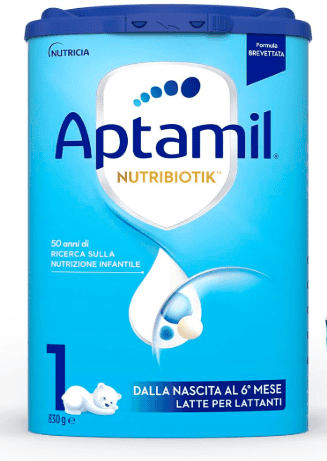
Great for full-time formula feeding and everyday digestion support
Why parents choose it:
This formula is known for being gentle, balanced, and widely available. It includes prebiotics and postbiotics, which support gut and immune health—plus DHA for brain development.
What’s inside:
- Cow’s milk base
- Prebiotics (GOS/FOS in a 9:1 ratio)
- Postbiotics (from gentle fermentation)
- DHA, nucleotides, vitamins & minerals
What parents notice:
Babies tend to have softer stools, fewer tummy troubles, and adapt well to this formula. It mixes easily and has a mild, non-metallic taste that most babies accept.
Why it works:
Prebiotic blends like this one have been linked to better digestion and lower risk of early infections (Closa-Monasterolo et al., 2013; Vandenplas et al., 2020).
HiPP Combiotic 1 Bio
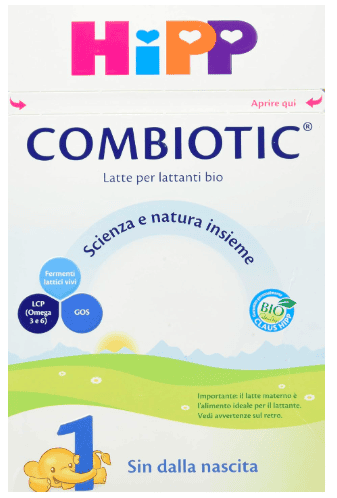
A clean, certified organic formula for gentle digestion
Why families love it:
HiPP is often chosen by families looking for a gentle, organic option with minimal processing. It uses lactose as the sole carbohydrate and includes both probiotics and prebiotics to mimic the gut benefits of breast milk.
What’s inside:
- EU-certified organic cow’s milk
- Lactose only (no added starch or sugar)
- GOS + probiotic L. fermentum
- DHA + full vitamin/mineral profile
What parents notice:
This formula is easy on sensitive tummies and often leads to more regular, comfortable digestion. It’s also a go-to for families avoiding palm oil or added flavoring.
Why it works:
The probiotic used here is similar to those found in breast milk, helping babies develop a healthy gut microbiome, especially in the early months (Closa-Monasterolo et al., 2013).
Humana 1
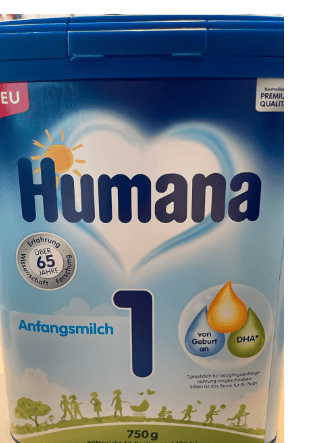
For babies with mild digestive sensitivity
Why some families try it:
If your baby is extra gassy, spits up often, or seems uncomfortable after feeds, Humana 1 might offer some relief. It uses partially hydrolyzed proteins, which are easier for little tummies to process.
What’s inside:
- Cow’s milk protein, partially hydrolyzed
- GOS (prebiotics)
- DHA & ARA
- No palm oil
What parents notice:
Many report less gas, fewer episodes of fussiness, and better feeding comfort. It’s a popular choice for babies who don’t quite need a medical-grade allergy formula but still need something gentler.
Why it works:
Partially broken-down proteins are easier to digest and may reduce crying or spit-up in sensitive babies (Osborn et al., 2018).
Kendamil Goat Milk 1
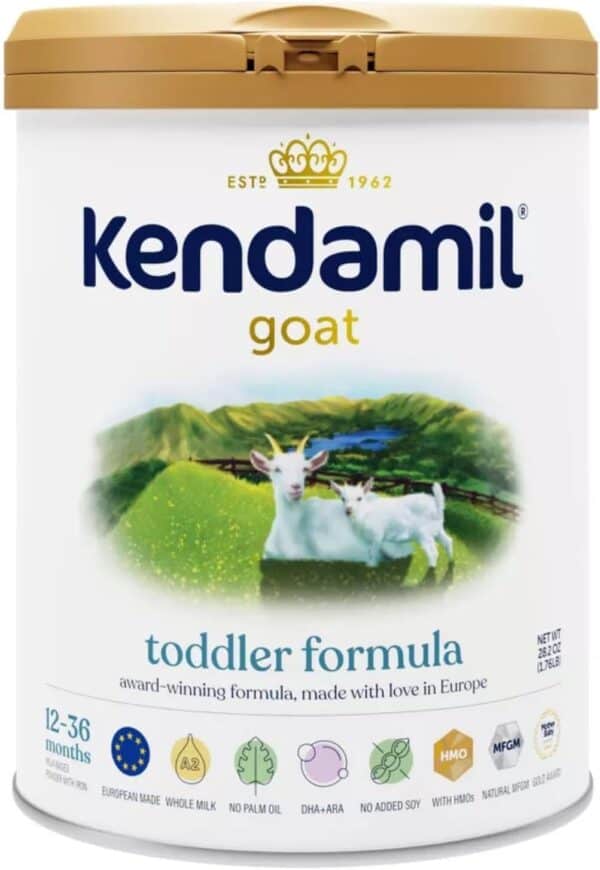
A creamy, gentle alternative to cow’s milk formulas
Why parents like it:
Some babies simply do better on goat milk—it’s not hypoallergenic, but it can be more digestible thanks to smaller fat globules and A2 protein. Kendamil also has a rich taste that babies tend to accept more easily.
What’s inside:
- Full-fat A2 goat milk
- No palm oil, soy, or fish oil
- Algae-based DHA
- GOS (prebiotics)
What parents notice:
Babies who struggled with cow’s milk often seem more settled on this one. Parents mention fewer tummy issues and better acceptance during feedings. This is a great alternative to standard cow’s milk formulas are extensively hydrolyzed or amino acid–based formulas, which are specially designed to reduce allergic reactions and support digestion.
Why it works:
Goat milk formulas can support growth and comfort just as well as cow’s milk—and may offer better tolerance for some little ones (He et al., 2022).
Plasmon Nutri-Mune 2
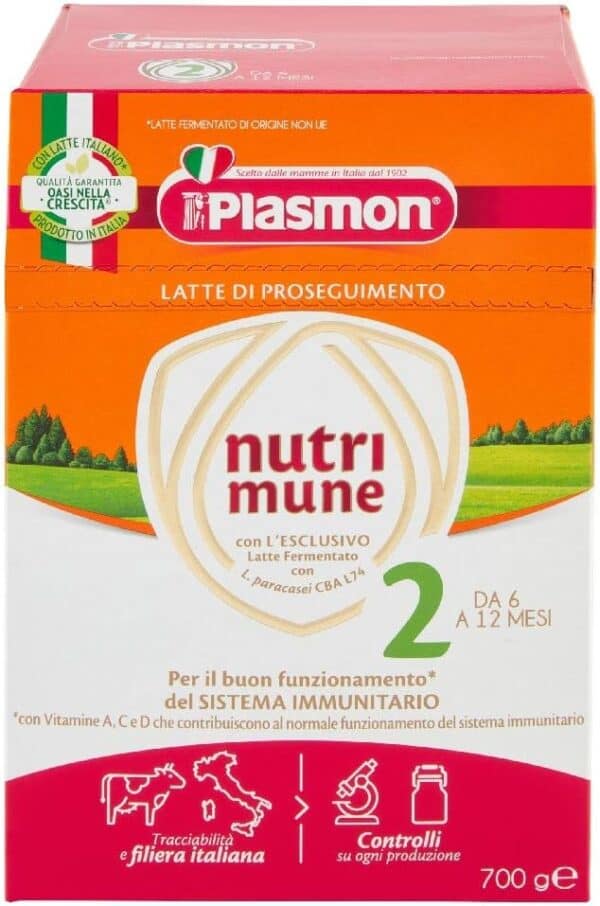
A go-to option for lactose sensitivity or post-virus recovery
Why it’s helpful:
Lactose-free formulas can be essential if your baby isn’t tolerating regular milk sugar. This one is great after a stomach bug or for managing confirmed lactose intolerance.
What’s inside:
- Lactose-free base
- Proprietary fermented milk matrix
- DHA, nucleotides
- Prebiotics for gut support
What parents notice:
Gas, bloating, or diarrhea often clear up within days. Parents also like that it still includes immune-supportive ingredients despite being lactose-free.
Why it works:
Lactose-free formulas like this can help babies bounce back from digestive issues without losing out on nutrition (Czinn & Blanchard, 2013).
Mellin 1
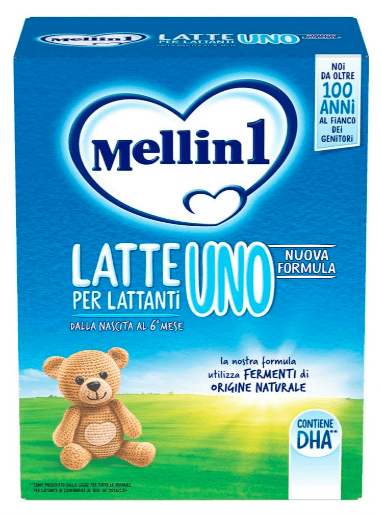
Made for combo feeding between breast and bottle
Why parents like it:
Mellin 1 is designed to support breastfeeding parents who need or want to supplement. Its gentle taste and smooth texture make it easier for babies to switch between breast and bottle.
What’s inside:
- Cow’s milk base
- DHA, ARA, nucleotides
- Balanced fats + vitamins/minerals
- Prebiotics
What parents notice:
This formula is often better tolerated than others during transition periods. Babies take to it without much fuss, and digestion tends to stay consistent.
Why it works:
Formulas created for combo feeding are more likely to succeed when they mimic the flavor and consistency of breast milk (Lanzersd et al., 2023).
Nestlé Nidina Optipro 1
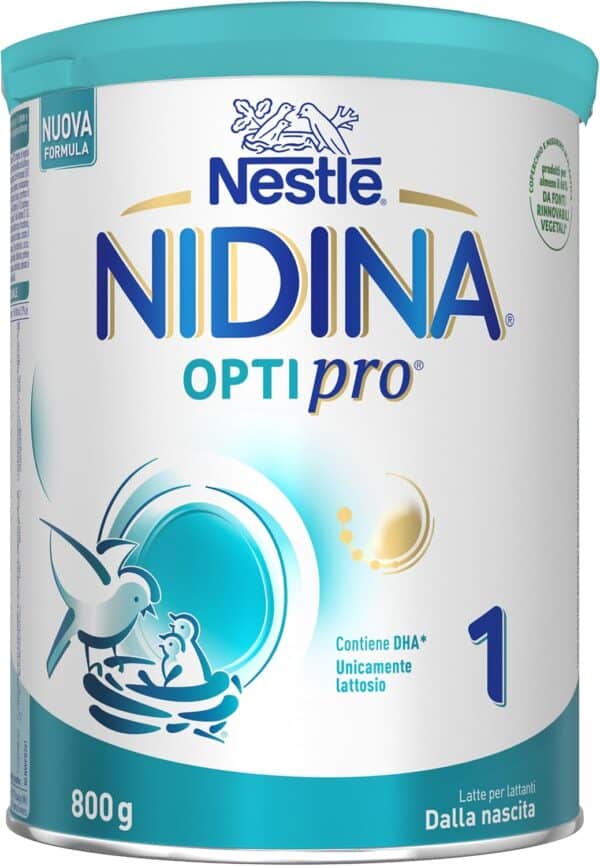
If taste is your biggest challenge, this one’s a winner
Why families love it:
This formula has a mild, pleasant taste that many babies prefer. It’s a top pick for babies who rejected other formulas or who are weaning from breastfeeding.
What’s inside:
- Partially hydrolyzed whey
- DHA, ARA, full micronutrient profile
- Nestlé’s Optipro protein balancing
What parents notice:
It mixes easily, tastes mild, and is well accepted by even the pickiest eaters. Parents often say it was “the one” that finally worked.
Why it works:
Optipro reduces protein quantity while keeping high biological quality, supporting healthy growth while being gentle on tiny kidneys (Abrams et al., 2015; Liotto, 2020).
Aptamil Pronutra 2
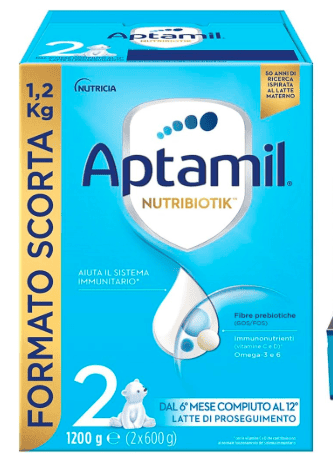
A follow-on formula that works well during weaning (6+ months)
Why parents choose it:
When your baby starts solids, their formula still matters. Aptamil 2 builds on the gentle foundation of Aptamil 1, with added nutrients for the next stage of growth.
What’s inside:
- GOS/FOS prebiotics (9:1)
- Postbiotics and fermented milk matrix
- DHA, calcium, iron, vitamins A/C/D
What parents notice:
This powder blends easily, doesn’t foam or clump, and continues to support digestion through the weaning stage. Babies usually transition from Aptamil 1 with no issues.
Why it works:
This formula supports the immune system and gut health just as babies are introduced to new foods and environmental exposures (Closa-Monasterolo et al., 2013).
Final Thoughts
There is no single “perfect” formula—just the one that helps your baby feel their best. Trying a homemade formula for your baby is also not a great idea. All the options mentioned above are safe, complete, and well-tested. The most important thing is that your baby is fed, supported, and thriving—and that you feel good about the choice you’ve made.
If a formula doesn’t feel like a fit, it’s okay to pivot. Trust your instincts, ask questions, and remember: feeding isn’t a contest—it’s a connection.
Citations
- Otten, L. et al. (2023). Safety and Suitability of an Infant Formula Manufactured from Extensively Hydrolysed Protein in Healthy Term Infants. Nutrients, 15. https://doi.org/10.3390/nu15081901
- Abrams, S., Hawthorne, K., & Pammi, M. (2015). A systematic review of controlled trials of lower-protein or energy-containing infant formulas for use by healthy full-term infants. Advances in Nutrition, 6(2), 178–88. https://doi.org/10.3945/an.114.006379
- Lemoine, A. et al. (2023). Pre-, pro-, syn-, and Postbiotics in Infant Formulas: What Are the Immune Benefits for Infants? Nutrients, 15. https://doi.org/10.3390/nu15051231
- Liotto, N. (2020). Protein content of infant formula for the healthy full-term infant. The American Journal of Clinical Nutrition. https://doi.org/10.1093/ajcn/nqaa061
- Cheung, K. et al. (2023). Health and nutrition claims for infant formula: international cross sectional survey. The BMJ, 380. https://doi.org/10.1136/bmj-2022-071075
- Vandenplas, Y. et al. (2020). A Partly Fermented Infant Formula with Postbiotics Including 3′-GL, Specific Oligosaccharides, 2′-FL, and Milk Fat Supports Adequate Growth, Is Safe and Well-Tolerated in Healthy Term Infants. Nutrients, 12. https://doi.org/10.3390/nu12113560
- Lanzersd, S. et al. (2023). Alternativen zu Säuglingsnahrungen auf Kuhmilchproteinbasis. Monatsschrift Kinderheilkunde, 171, 822–828. https://doi.org/10.1007/s00112-023-01788-6
- Bolognese, M. et al. (2024). Nutritional composition evaluation with emphasis on the lipid quality of infant formulas. Journal of Food Composition and Analysis. https://doi.org/10.1016/j.jfca.2024.106683
- He, T. et al. (2022). Goat Milk Based Infant Formula in Newborns: A Double-Blind Randomized Controlled Trial on Growth and Safety. Journal of Pediatric Gastroenterology and Nutrition, 75, 215–220. https://doi.org/10.1097/MPG.0000000000003493
- Osborn, D., Sinn, J., & Jones, L. (2018). Infant formulas containing hydrolysed protein for prevention of allergic disease. The Cochrane Database of Systematic Reviews, 10. https://doi.org/10.1002/14651858.CD003664.pub6
- Closa-Monasterolo, R. et al. (2013). Safety and efficacy of inulin and oligofructose supplementation in infant formula: Results from a randomized clinical trial. Clinical Nutrition, 32(6), 918–927. https://doi.org/10.1016/j.clnu.2013.02.009
- Martin, C., Ling, P., & Blackburn, G. (2016). Review of Infant Feeding: Key Features of Breast Milk and Infant Formula. Nutrients, 8. https://doi.org/10.3390/nu8050279